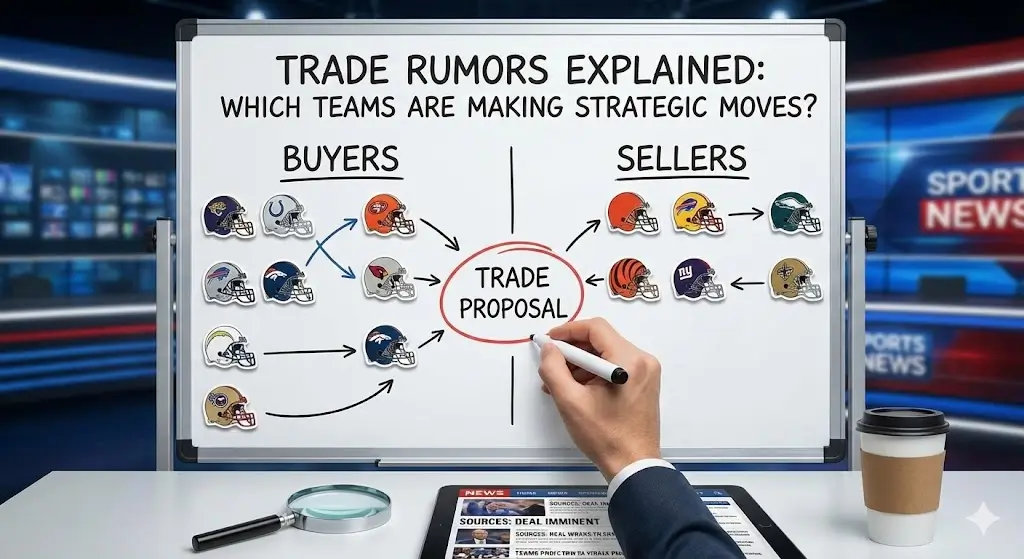
Trade Rumors Explained: Which Teams Are Making Strategic Moves?
Trade rumors are a major part of every NFL season. They reveal how teams evaluate their rosters, identify weaknesses, and search for ways to improve before key deadlines. While not every rumor turns into a deal, many of them offer valuable insight into a team’s long-term strategy or immediate needs.
Understanding these rumors helps fans get a clearer picture of which teams are preparing to make bold moves — and why those moves matter.
This guide breaks down how trade rumors work, what triggers them, and which types of teams are most likely to make strategic decisions.
1. Why Trade Rumors Matter in the NFL
NFL trades are rare compared to other leagues, but when they happen, they often reshape playoff races. Trade rumors matter because they reveal:
- A team’s confidence in current starters
- Internal discussions about talent gaps
- Financial or contract issues
- How injuries affect roster direction
Even if no trade occurs, the rumor alone shows what front offices are thinking and planning behind the scenes.
2. Contenders Looking for Missing Pieces
Teams in playoff contention are often at the center of trade rumors. They have clear goals and may be one key player away from becoming legitimate championship threats.
Contender trade targets often include:
- Star pass rushers
- Reliable wide receivers
- Impactful cornerbacks
- Powerful interior linemen
These moves help contenders strengthen weak spots before the postseason push.
3. Rebuilding Teams Shopping Veterans
At the other end of the spectrum, rebuilding teams look to gain draft picks or salary-cap flexibility. They often explore trades involving older or expensive veterans.
Common reasons rebuilding teams trade players:
- Freeing cap space
- Acquiring future draft capital
- Creating room for younger talent
- Resetting team culture
These trades help franchises build long-term structure rather than short-term wins.
4. Injury Situations That Spark Trade Activity
Injuries are one of the biggest triggers for trade rumors. When a key player goes down, teams quickly search for replacements to avoid losing momentum.
Positions often targeted after injuries:
- Offensive line
- Cornerback
- Running back
- Linebacker
- Backup quarterback
A midseason injury can turn a quiet team into an active one in the trade market.
5. Contract Issues Leading to Trade Talks
Contract disputes often spark trade rumors, especially when negotiations stall or a player requests a fresh start elsewhere.
Contract-driven trade stories may involve:
- Players seeking extensions
- Front offices unwilling to match salary demands
- Veterans nearing free agency
- Teams avoiding long-term financial risk
When contract problems surface, trade rumors usually follow quickly.
6. Underperforming Teams Making Bold Changes
Teams that start the season poorly may make trades to shake things up. These moves can involve replacing struggling starters or adding younger talent.
Reasons for underperforming teams to trade:
- Changing team direction
- Building for next year
- Adjusting to new coaching systems
- Fixing persistent weaknesses
These teams often become sellers in the trade market.
7. Scheme Fit and Coaching Preferences
Some rumors begin because a player does not fit a new scheme or coaching strategy. A strong talent in the wrong system often becomes available.
Scheme-related trade cases include:
- Defensive players struggling in new coverage systems
- Offensive players misaligned with play-calling
- Special teams adjustments
- Coaching staff wanting different skill sets
These trades help teams align personnel with their coaching philosophy.
8. How Insiders Evaluate the Likelihood of a Trade
Not all rumors are equal. Reliable insiders look for specific signs that a trade is truly possible.
Signs a rumor is meaningful:
- Multiple insiders report similar info
- The team’s cap situation aligns with the rumor
- Player usage decreases suddenly
- Agents or coaches hint at dissatisfaction
These clues help fans separate realistic rumors from speculation.
9. Why Strategic Trades Can Change a Season
One impactful trade can reshape an entire playoff race or improve a team’s long-term outlook.
Trades can:
- Fix immediate roster needs
- Boost locker-room morale
- Elevate offensive or defensive units
- Replace injured stars
- Add playoff-ready veterans
Strategic trades are often the spark that pushes a team from average to competitive.
Conclusion
Understanding trade rumors gives fans a clearer look at which teams are making strategic moves and why those moves matter. Whether a contender is chasing a missing piece, a rebuilding team is gathering assets, or a franchise is dealing with injuries or contract issues, trade rumors highlight the decisions shaping each season.
By following these stories, fans gain deeper insight into team strategy and the shifting landscape of the NFL.