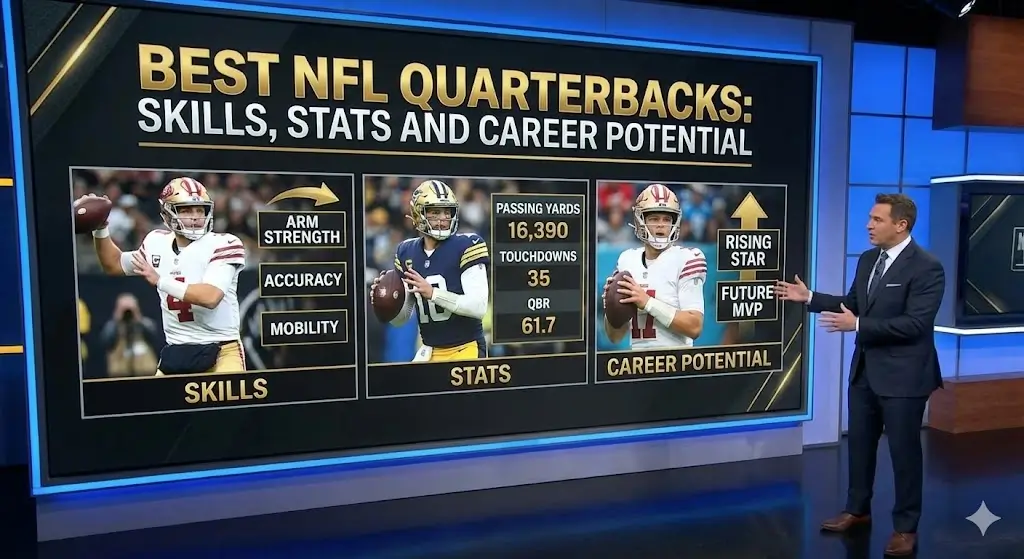
Best NFL Quarterbacks: Skills, Stats and Career Potential
The best NFL quarterbacks combine elite skills, strong statistical production, and long-term career potential. They lead their teams with accuracy, intelligence, mobility, and composure under pressure. Quarterbacks shape every game, and their performance often determines whether a team wins or struggles.
This guide breaks down the key skills that define elite quarterbacks, the stats that separate top players from the rest, and the factors that influence long-term career success.
1. Accuracy and Ball Placement Define Elite QBs
Accuracy is the foundation of high-level quarterback play. The best quarterbacks consistently deliver the ball where only their receivers can catch it.
Key accuracy traits include:
- Timing throws into tight windows
- Leading receivers efficiently
- Placing passes away from defenders
- Completing throws under pressure
- Maintaining rhythm across downs
Elite ball placement turns routine plays into explosive gains and minimizes risky throws.
2. Arm Strength That Opens the Entire Field
Top quarterbacks can stretch defenses vertically and horizontally. Strong arm talent allows them to hit deep routes, fire fast passes into tight spots, and attack every part of the field.
Arm strength advantages:
- Threaten safeties with deep accuracy
- Fit throws into narrow coverage
- Extend plays with sideline precision
- Build explosive play opportunities
Arm talent alone doesn’t make a quarterback elite, but it expands the playbook significantly.
3. Decision-Making Under Pressure
The best quarterbacks make smart decisions when defenses bring pressure. They read blitzes, identify weaknesses, and adjust quickly.
Decision-making skills include:
- Recognizing defensive disguises
- Finding hot routes
- Throwing the ball away at the right time
- Avoiding turnover-worthy plays
- Protecting the football in tight moments
Great decision-making often separates long-term stars from short-term performers.
4. Pocket Presence and Movement Skills
Elite quarterbacks manage the pocket with calm footwork and smart movement. They avoid pressure without panicking.
Pocket presence traits:
- Sliding to open passing lanes
- Evading rushers with small movements
- Keeping eyes downfield
- Resetting feet before throwing
- Extending plays without unnecessary risk
Quarterbacks with strong pocket presence rarely waste opportunities.
5. Mobility That Adds Dimension to the Offense
Many of today’s top quarterbacks create advantages with mobility. They extend plays, escape pressure, and threaten defenses on designed runs.
Mobility benefits:
- Convert third downs with scrambles
- Break coverage assignments
- Increase red zone efficiency
- Force defenses to adjust game plans
Even quarterbacks who aren’t true runners use mobility to avoid sacks and buy time.
6. Stats That Reveal True Quarterback Performance
Beyond simple passing yards and touchdowns, advanced metrics help evaluate quarterbacks more accurately.
Key advanced stats include:
- EPA per play: Measures impact on scoring
- Completion percentage over expected (CPOE)
- Success rate: Consistent, on-schedule plays
- Big-time throw rate: High-quality, high-difficulty passes
- Turnover-worthy play rate: Smart decision-making
These metrics show which quarterbacks consistently elevate their teams.
7. Leadership and Intangibles Fuel Long-Term Success
Physical skills matter, but leadership traits shape a quarterback’s career more than any statistic.
Important intangibles:
- Strong communication
- Film-study discipline
- Situational awareness
- Confidence under pressure
- Ability to rally teammates
Quarterbacks who command respect often drive long-term team success.
8. Career Potential: What Predicts a Long, Successful Run?
Several factors influence how long a quarterback can sustain elite play.
Career potential indicators:
- Adaptability as defenses evolve
- Ability to avoid unnecessary hits
- Growth in pre-snap reads
- Chemistry with coaching staff
- Consistent improvement year over year
Quarterbacks who excel in these areas often enjoy long, productive careers.
9. How Supporting Cast Shapes QB Performance
Even great quarterbacks need structure and talent around them.
Supporting factors that boost performance:
- Strong offensive line
- Reliable receiving corps
- Creative offensive play-calling
- Effective running game
- Defense that keeps games manageable
A complete team allows quarterbacks to maximize their strengths.
Conclusion
The best NFL quarterbacks stand out through a blend of elite skills, advanced statistical efficiency, leadership traits, and long-term growth potential. They read defenses quickly, throw with precision, handle pressure, and elevate everyone around them.
Understanding these qualities gives fans a clearer view of what makes a quarterback truly great — not just now, but for the future of the league.