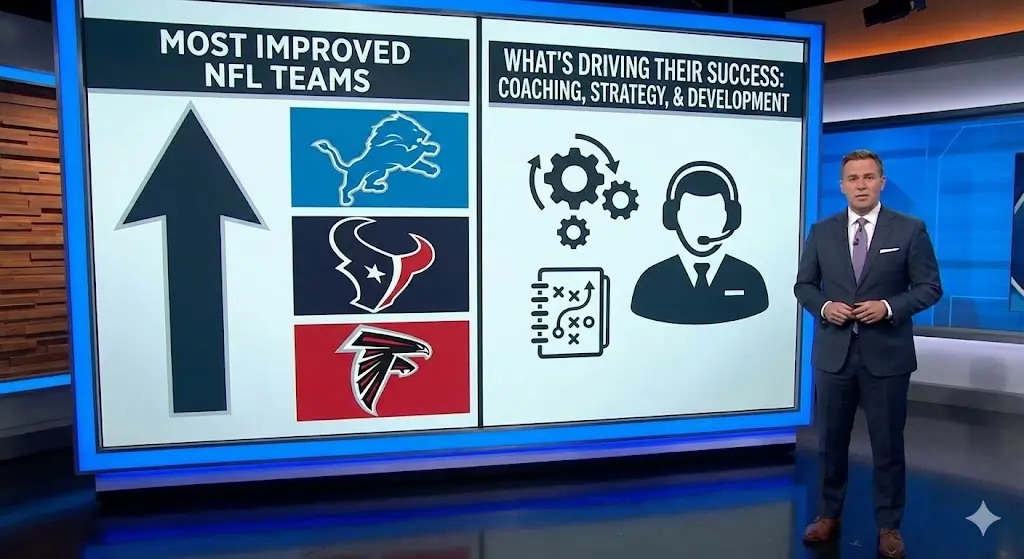
Most Improved NFL Teams and What’s Driving Their Success
The most improved NFL teams this season are proving that growth comes from smart decisions, strong coaching, and consistent execution. These teams show noticeable jumps in efficiency, discipline, and overall performance — even when their rosters didn’t change dramatically.
Improvement in the NFL is rarely random. It comes from clear strategies, better player development, and adjustments that finally start paying off.
This guide explains which factors drive these improvements and how they help teams rise faster than expected.
1. Coaching Adjustments That Unlock Team Potential
One of the biggest reasons teams show rapid improvement is coaching. Better play design, smarter decision-making, and stronger communication change everything.
Key coaching upgrades include:
- Clearer offensive identity
- Better use of star players
- Improved defensive schemes
- Stronger situational awareness
- More efficient in-game adjustments
Teams with improved coaching often start winning close games they previously lost.
2. Quarterback Development Leading the Turnaround
Many of the most improved teams benefit from better quarterback play. Whether it’s a young QB taking a leap or a veteran finding rhythm, improved consistency changes the entire offense.
QB improvements include:
- Faster decision-making
- Higher accuracy
- Fewer turnover-worthy plays
- Stronger red zone execution
- Better connection with receivers
A more reliable quarterback often turns a middle-tier team into a legitimate contender.
3. Offensive Line Growth Creating Stability
No improvement matters more than offensive line performance. When the line protects well, everything else becomes easier.
Offensive line improvements show through:
- Higher pass-block win rate
- More explosive run plays
- Cleaner pockets for quarterbacks
- Fewer penalties
- Better communication
Strong lines help teams sustain longer drives and control time of possession.
4. Defensive Turnarounds Built on Pressure and Discipline
Many improved teams take a major step on defense. They create more pressure, force turnovers, and stop explosive plays.
Defensive upgrades include:
- Higher pressure rate
- Stronger secondary coverage
- Fewer missed tackles
- Smarter blitz packages
- Better tackling fundamentals
A disciplined defense helps teams stay competitive in every matchup.
5. Improved Red Zone Efficiency Leading to More Wins
Red zone performance is one of the strongest predictors of success. The most improved teams finish drives better than they did in past seasons.
Red zone improvements include:
- More creative play-calling
- Better personnel usage
- Higher touchdown conversion rate
- Stronger rushing success inside the 20
- Tighter defensive coverage in key moments
Teams that turn field goals into touchdowns rise quickly in the standings.
6. Young Players Stepping Into Bigger Roles
Draft success and player development often explain team improvement. When young players mature, teams gain depth and explosiveness.
Common youth-driven improvements:
- Breakout receivers
- Second-year linebackers becoming leaders
- Rookies earning starting roles
- Young defensive backs improving coverage
- Faster, more versatile players in open space
Young talent brings energy and consistency that help teams compete weekly.
7. Smart Free-Agency Additions Filling Critical Gaps
Many improved teams strengthened weak spots with targeted free-agency moves — not splashy signings, but smart fits.
Impactful additions include:
- Reliable pass rushers
- Run-stuffing defensive tackles
- Veteran offensive linemen
- Slot corners with strong coverage skills
- Versatile running backs
These calculated moves solve specific problems that once held teams back.
8. Better Turnover Differential Driving Game Flow
Turnovers directly influence wins. Improved teams often cut down on giveaways while creating more takeaways.
Turnover improvements come from:
- Smarter QB decisions
- Defenders playing aggressive but controlled
- Better ball security fundamentals
- Forced fumbles from pressure packages
- Fewer risky passes and penalties
Positive turnover differential often explains why teams improve without major roster changes.
9. Stronger Team Chemistry and Leadership
Success isn’t only numbers — improved chemistry and leadership matter.
Chemistry improvements include:
- Clear team identity
- Better communication
- Veteran leadership guiding younger players
- Stronger sideline and locker-room energy
- Trust between coaches and players
Teams with tight chemistry often play more disciplined, resilient football.
Conclusion
The most improved NFL teams show that progress comes from a mix of coaching upgrades, quarterback development, smarter roster construction, and improved efficiency on both sides of the ball. Whether through better red zone execution, stronger pass protection, or disciplined defense, these teams are proving that meaningful improvement leads to real results.
Fans following these trends can better understand why certain teams rise faster than expected — and which ones may continue climbing throughout the season.