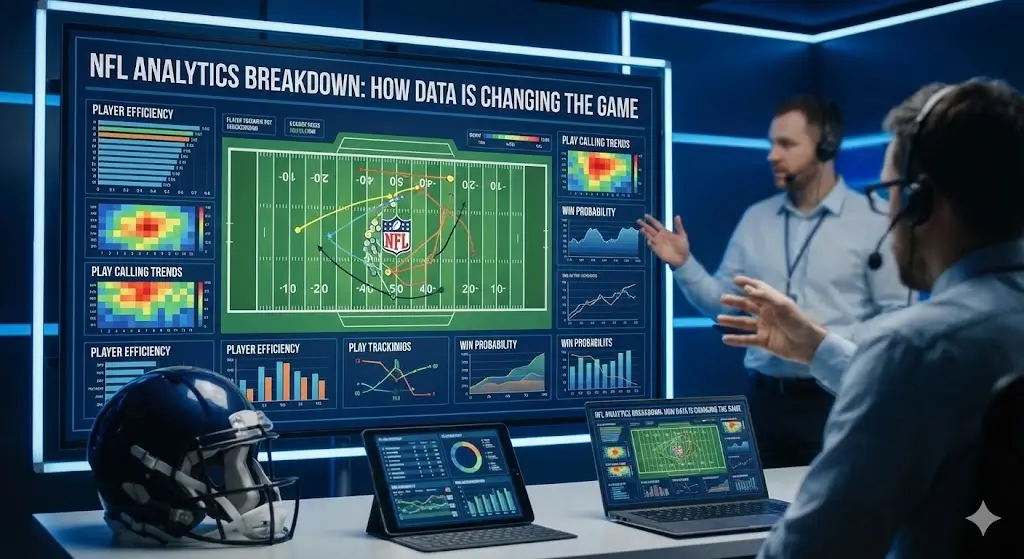
NFL Analytics Breakdown: How Data Is Changing the Game
The NFL analytics breakdown shows how data is transforming every part of football. Teams now rely on advanced metrics, real-time tracking, predictive models, and efficiency scores to make smarter decisions on and off the field.
Analytics no longer sit in the background — they shape play-calling, roster building, player development, and game strategy every week.
This guide explains how analytics work, why they matter, and how they are changing the modern NFL.
1. The Rise of Data-Driven Decision-Making
Analytics have become a core tool in NFL front offices and coaching staffs. Teams use data to:
- Identify patterns
- Predict outcomes
- Optimize performance
- Reduce uncertainty
Instead of relying only on instinct, coaches combine experience with data to create more effective strategies.
Analytics help teams adjust faster, understand opponents better, and improve consistency throughout the season.
2. Player Tracking Technology Is Changing Everything
The NFL uses tracking chips inside player pads to gather thousands of data points per game. This technology provides:
- Speed and acceleration metrics
- Route timing
- Player separation
- Tackling angles
- Pressure rates
These numbers help teams evaluate players more accurately and design better schemes based on real field movement, not just film study.
3. Next Gen Stats Reveal Deeper Player Performance
Next Gen Stats show how players truly perform beyond the box score. They analyze:
- Completion probability
- Expected yards gained
- Time to throw
- Catch difficulty
- Defensive coverage impact
These insights highlight elite performances and expose hidden weaknesses.
For example, a quarterback’s completion percentage might look average — until analytics reveal he faced the toughest windows all game.
4. Analytics in Offensive Strategy
Modern offenses rely heavily on data to make smarter decisions.
Key offensive analytics include:
- Early-down pass rate
- Play-action efficiency
- Fourth-down success probability
- Explosive play rate
- Red zone efficiency
Teams use these numbers to design plays that maximize success and reduce predictable tendencies.
Analytics also show when aggressive play-calling creates long-term advantages, especially on fourth down.
5. Analytics in Defensive Game Planning
Defenses use analytics to identify how opponents behave in different situations.
Defensive metrics include:
- Pressure rate
- Coverage success rate
- Run-stop win rate
- Blitz efficiency
- Missed tackle rate
These insights help defensive coordinators adjust matchups, disguise looks, and apply pressure more effectively.
Data-driven defenses often make offenses uncomfortable by anticipating tendencies.
6. Predictive Models Improve In-Game Strategy
Predictive analytics play a major role in real-time coaching decisions.
These models help coaches:
- Choose when to go for it on fourth down
- Manage the clock more efficiently
- Decide between running or passing
- Evaluate field-goal odds
- Predict opponent behavior
Win probability models update after every play, showing how each decision affects the outcome.
7. Analytics in Scouting and Player Development
Teams now use analytics to evaluate players more accurately during the draft and throughout their careers.
Analytics help with:
- Identifying undervalued prospects
- Comparing players across systems
- Measuring consistency
- Tracking long-term improvement
- Preventing injuries through workload data
This approach leads to smarter draft picks and more efficient roster building.
8. Front Offices Use Analytics for Cap and Contract Decisions
Analytics influence financial decisions just as much as on-field strategy.
Teams analyze:
- Positional value
- Player age curves
- Injury risk projections
- Salary efficiency
- Roster-building models
This helps franchises avoid overpaying, manage the cap, and build sustainable long-term plans.
9. Special Teams Are Becoming Analytics-Driven Too
Special teams units benefit from analytics focusing on:
- Punt placement
- Return lane effectiveness
- Field position value
- Kicking accuracy by distance
- Coverage trends
Small edges in special teams often swing close games, making data even more valuable.
10. How Analytics Help Fans Understand the Game Better
Analytics aren’t only for teams — they make the NFL easier for fans to understand.
Fans can now follow:
- Real-time win probability
- Next Gen Stats
- Efficiency charts
- Drive metrics
- Player impact ratings
These tools reveal the deeper strategy behind every play.
Conclusion
The NFL analytics breakdown shows how deeply data is shaping the modern game. From player tracking to advanced metrics, predictive models, and smarter decision-making, analytics have become essential for every team. They improve performance, maximize efficiency, and reveal hidden insights that change how football is played and understood.
For fans, analytics offer a smarter, clearer way to enjoy the sport — helping everyone see the strategy behind every snap.