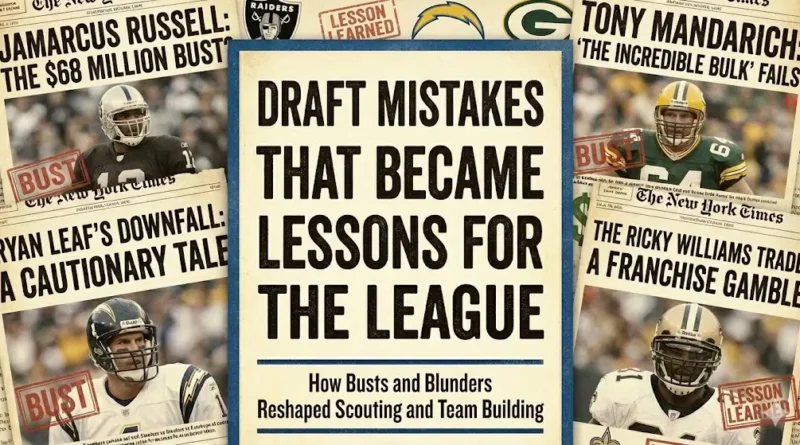
Draft Mistakes That Became Lessons for the League
Draft mistakes that became lessons for the league serve as powerful reminders that even the most talented executives and analysts are not immune to misjudgment. The NFL Draft is a high-stakes event where reputations are made and futures are sealed. But it’s also where overconfidence, poor scouting, or external pressure can lead to decisions that reshape franchises—and force the entire league to evolve.
Overhyping Athleticism Over Football IQ
One of the most repeated errors in draft history involves overvaluing raw physical traits. Teams have often fallen in love with 40-yard dash times or vertical leap results, only to realize later that speed doesn’t always equal success.
Scouting departments have since shifted toward comprehensive assessments, blending athletic testing with game film, character interviews, and football intelligence evaluations. This holistic approach is now standard across the league.
Ignoring Red Flags and Off-Field Concerns
Some of the most regrettable draft picks came with clear warning signs. Whether it was a history of suspensions, poor work ethic, or off-field behavior issues, franchises sometimes looked the other way in hopes of landing a high-ceiling player.
These failures forced organizations to take character screening seriously. Today, background checks and psychological profiles are routine, with some teams even hiring private investigators to vet prospects more thoroughly.
Passing on Game-Changers
Perhaps the most painful mistake is passing on a player who goes on to become an all-time great. Whether due to positional need, scheme fit, or misjudgment, these decisions haunt front offices for years.
The league responded by pushing for deeper analytics, advanced scouting software, and decision-making models that reduce bias and expand viewpoint diversity within draft rooms.
Reaching Based on Positional Desperation
Teams occasionally panic and reach for a position of need far earlier than a player is projected to be drafted. While addressing roster gaps is important, letting need outweigh value often leads to long-term problems.
Modern franchises now emphasize “best player available” philosophies, building depth and trading later for needs instead of burning a premium pick on short-term fixes.
Misreading the Coaching Fit
Another issue is failing to consider how a player fits into a team’s coaching scheme. Drafting a zone cornerback for a man-to-man defense or a pocket passer in a run-heavy offense has doomed promising careers before they even began.
As a result, collaboration between scouts and coaching staff has become tighter. Systems are now built around player strengths instead of forcing players into rigid roles.
Underestimating Small-School Talent
For years, top programs dominated early-round picks, while athletes from smaller colleges were often overlooked. However, several Pro Bowlers and Hall of Famers have emerged from lesser-known schools, proving the playing field is broader than many thought.
This realization led to expanded scouting coverage, the rise of regional scouts, and an open-minded approach to identifying talent regardless of school prestige.
Overdrafting Based on Hype and Media Pressure
Sometimes, a player’s draft stock rises due to media buzz rather than actual performance. Teams influenced by public perception have made hasty selections that failed to live up to expectations.
Franchises now guard against this by trusting internal data over headlines. Media narratives are acknowledged but weighed against tangible performance metrics and verified scouting notes.
Conclusion
Draft mistakes that became lessons for the league have reshaped how teams operate. Every failed pick has left a trail of wisdom that contributes to more thoughtful, precise draft strategies. Today’s front offices are more collaborative, analytical, and risk-aware than ever before. As the league evolves, past missteps continue to offer the insight needed to make better choices—because in the NFL, learning from history is key to building a successful future.